Flatland

by Mark Meyer · Posted in: musings · photography techniques
I have a love-hate relationship with graphic design. I came to photography through a design job, I love it when other people produce wonderful design, but I think it's just too damned hard most of the time. It's slow. Maybe the camera has made me lazy—more than a second is considered a long exposure in the photography world, after all.
Still I enjoy designing within the photograph. Thinking of photography as a design rather than a representation is a good way to train your eyes to see the two dimensional image before you press the shutter. Normally this makes us aware of the lengths we must go to communicate the three dimensional world handicapped by the flatness of the print. Managing the illusion of space is a basic skill for photographers, but sometimes it's productive to let it go and revel in the two dimensions of the plane. Still life photography is a natural genre for this because we are free to organize the subject practically without limit.
The above image was produced for our local chapter of the AIGA. The goal was to create a photo that looked like it could just as easily have been produced in Adobe Illustrator. Because I am shooting straight down on the subject, the compositional challenges are the same as they would be producing a layout with software like Quark XPress or InDesign. Essentially this is graphic design with real objects rather than virtual ones. It was shot with a single Profoto strobe in a standard reflector and a bounce card. The single hard light source ensures that the translucent french curve will cast a hard shadow. Also, the hard shadows from the rest of the objects encourage the viewer to see it more like an illustration. This kind of image is very easy for designers to work with because the subject lives in the same plane as type and other elements that they might add—they can interact with each other visually.
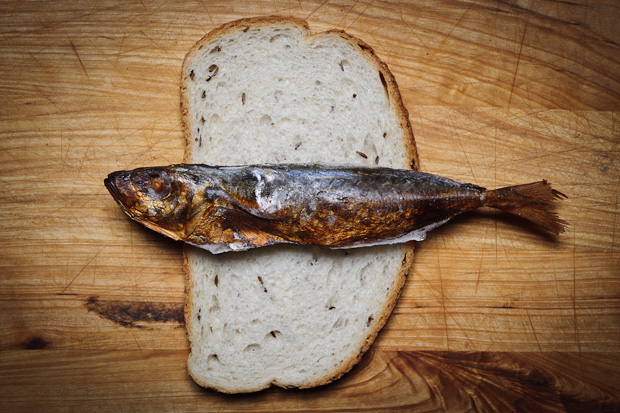
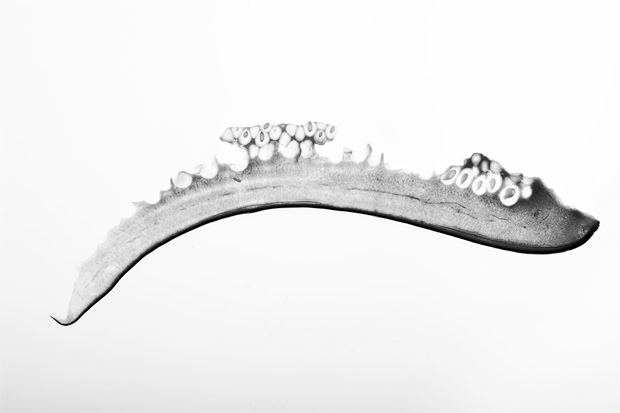
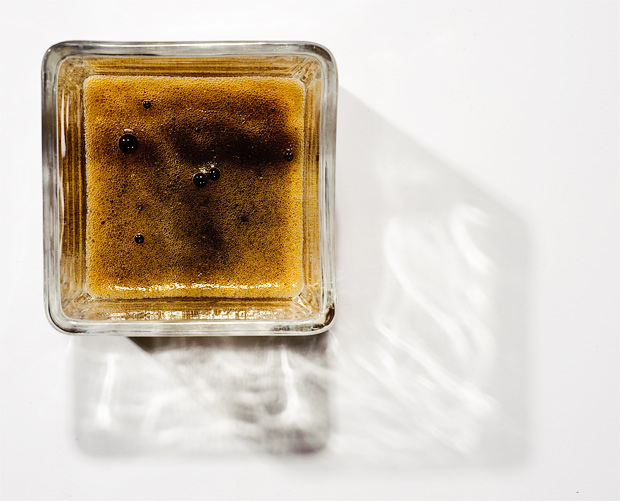
Here are a few more still life photos where I've tried to avoid creating a deep space and have left the subjects comfortably on the flat plane commingling with their shadows.
(If you are in Anchorage, there may still be room for this AIGA event on March 24:
The MAC TALK: Preventative Measures for a Long & Happy Life )
Fish on Rye
Sliced Cucumber
Soda
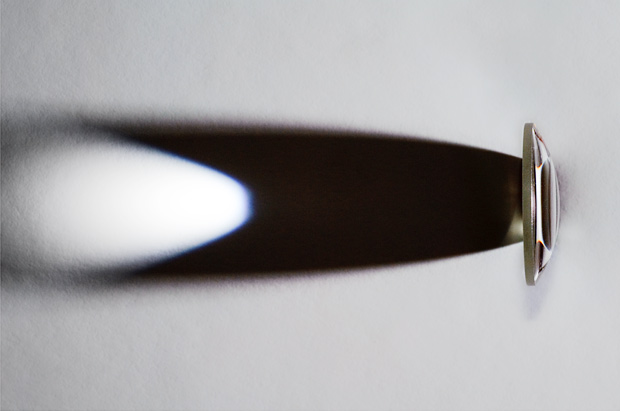
Lens element from Nikon 35mm f/2.0